You are not broken. You are healABLE!
Let us show you how...
Register Now!
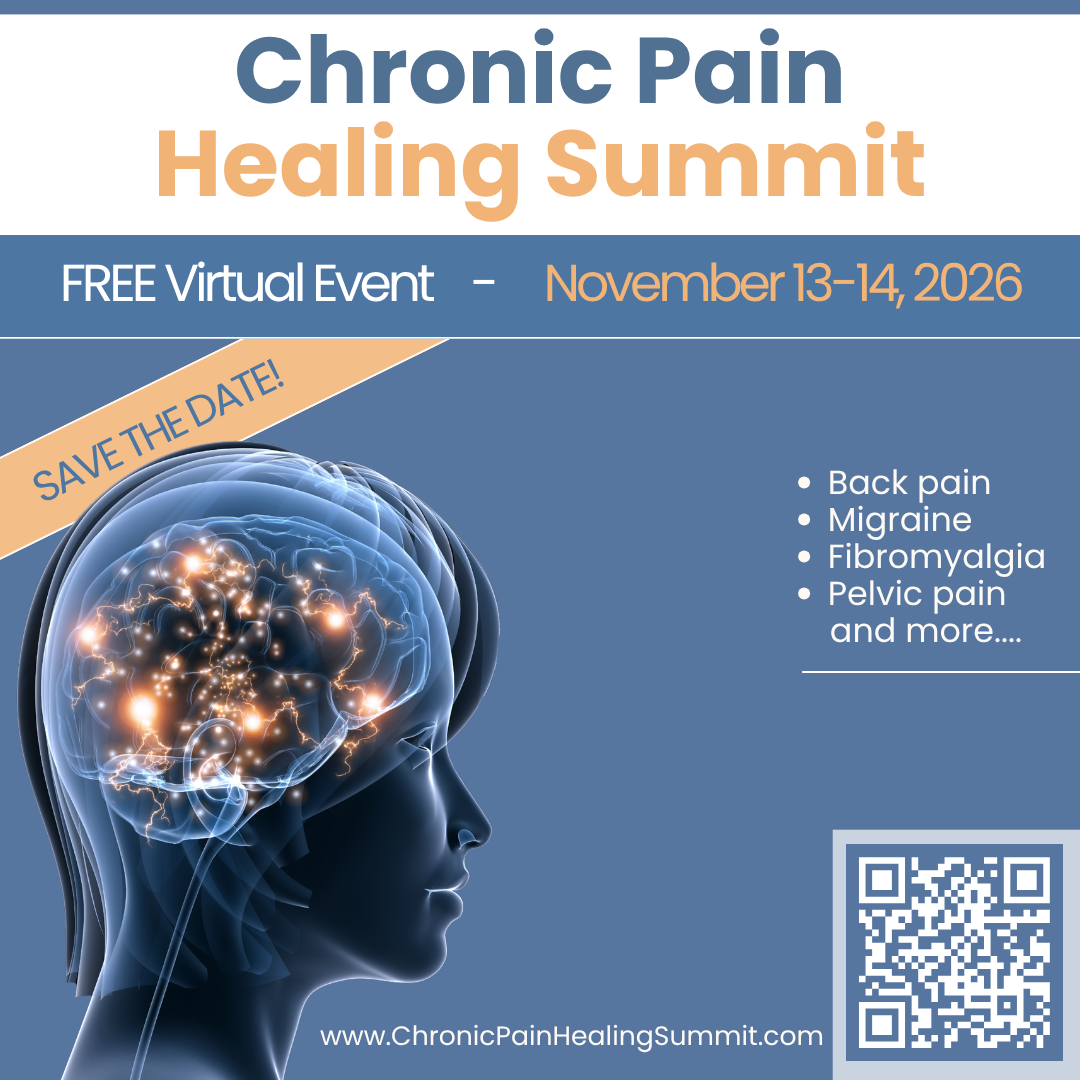
HealABLE Pathway's signature FREE event kicks off on November 13, 2026.
This event is developed in collaboration with the industry’s leading global non-profit organizations: ATNS (Association for the Treatment of Neuroplastic Symptoms - USA), Living Proof (UK), and Stichting Emovere (NL). Click the link below for more information or to register for this Free Event.
Discover the latest neuroscience behind how the brain, nervous system, and lived experiences shape pain.....and recovery!
More Information + Registration
Just get curious. How are tens of thousands of people healing.
Have you been told that healing is not possible? That managing your chronic pain or symptom is your only solution?
Do you feel like you've tried everything — and still the symptom persists, the tests keep coming back "normal," and you've been told to just learn to live with it? You are not alone, and you are not out of options.
Because here's what most people living with neuroplastic pain and symptoms have never been told:
You are not broken. There is new scientific understanding that says — you are healABLE.
Not cope with it. Not just manage it. Actually find significant relief and improved quality of life— the possibility of healing that you may have stopped believing was possible. That may sound too good to be true — especially if you've been living with this for months, years, or even decades. But this isn't false hope. Countless of people are already successfully doing it.
The science behind how the brain, nervous system, and lived experience shape both pain and recovery has been evolving rapidly — and much of the research has not yet reached everyday medical practice. fMRI brain imaging technology only became available in the mid-1990s.¹ The concept of neuroplasticity only reached popular awareness in 2007.² And the International Association for the Study of Pain (IASP), only updated its official definition of pain in 2020 — removing the longstanding requirement for tissue damage to be present.³
That's how recent this is. And why so many people — and their doctors — haven't heard of it yet.
This gap in awareness is exactly why HealABLE Pathways exists.
If interested, read the full science behind this here.
Healing often unfolds through multiple pathways.
Neuroplastic symptoms rarely resolve through a single solution. Different people find relief through different combinations of approaches. Pathways that help the mindbody system experience a greater sense of safety can allow symptoms to gradually settle over time.
At HealABLE Pathways, we take a holistic mindbody approach to recovering from these chronic symptoms, recognizing that multiple evidence-based strategies are often needed to address the various underlying drivers of symptoms.
Our goal is to simplify the journey. Through trusted education, practical resources, and a clear, supportive roadmap, we help you understand your options and take meaningful steps forward — so you can feel empowered, reconnect with the healing capacity already within you, and begin reclaiming your health and your life.

Not sure where to start?
You don’t need to figure everything out before you begin.
It's recommended to start with Path 1: Symptom Assessment to ensure medical safety and better understand whether the symptom you are currently experiencing may be neuroplastic (mindbody) in nature.
If you’ve already done this, a helpful next step is Path 2: Why/How Symptoms Happen, where you’ll learn how pain and symptoms are generated in the brain—and why they are real, even without ongoing injury.
From there, you can explore the other pathways based on what feels most relevant to you.
A different way to approach healing
You don’t need to follow these pathways in order—and it's encouraged to not do anything perfectly. ...Gasp! I know! Strange, right?
It's clear, the stakes feel high to "get it right", but as you'll soon realize, perfectionism and being hard on yourself might just be some of the drivers fuelling symptoms. Try to lower the intensity, and you'll typically achieve better results.
Healing is not linear. Most people move between pathways over time and come back to them as needs change through different seasons of life.
What matters most is bringing curiosity, patience, and self-compassion into the process—because reducing pressure is part of what helps the brain and body feel safe again.

PATHWAY 1
Symptom Assessment
It is important for your personal physician to “rule out” any structural injury, infection, or organ disease as the cause of your symptom. Once this has been confirmed, you can begin to “rule in” the possibility that your symptom may be neuroplastic in nature and may respond to this treatment approach by completing one of the many self-assessments and reviewing the F.I.T. criteria.

PATHWAY 2
Understand the Brain's Role
Understanding how (and why) the brain generates real physical symptoms is an important part of recovery. Here, you will learn about the mindbody connection, predictive processes in the brain, and how learned neural circuits can produce debilitating symptoms even in the absence of ongoing injury or disease. This knowledge often helps reduce fear and builds confidence.

PATHWAY 3
Identify Your Unique Drivers
There are multiple drivers contributing to your symptoms, and many exist outside of conscious awareness. Along this pathway, you'll find tools to help bring stressors or perceived threats into awareness so they can be acknowledged and addressed. We explore connections between nervous system dysregulation, chronic stress, emotional distress, and when symptoms first began.

PATHWAY 4
⬆ Increase Your Felt Sense of Safety
We can’t simply think our way out of pain and symptoms. While symptoms are generated by the brain, the nervous system does not respond to language—it responds to signals from the body.
Building a felt sense of safety within the body helps the brain shift out of protection mode. This pathway focuses on developing capacity within the nervous system so it can naturally move through its different natural states without getting stuck in a stress response for too long.
This includes supporting safety across biological, psychological, and social/environmental areas (biopsychosocial)—for example, movement, breathwork, meditation, time in nature, and creating environments and relationships where you feel safe, supported, and at ease.

PATHWAY 5
⬇ Decrease Brain Perceived Danger
This pathway focuses on identifying and reducing the patterns the brain may be interpreting as threat—again across biological, psychological, and social/environmental areas (biopsychosocial).
Depending on your situation, this may involve working with stress-inducing thought patterns (Dr. Schubiner's 7 Fs), learned survival strategies such as people-pleasing, perfectionism, and overachievement, as well as addressing a harsh inner critic or lack of self-compassion and self-care.
Because the brain does not distinguish between physical and emotional threat, it is critical to explore our emotional world. Emotions that have been pushed aside may need expression. As perceived danger decreases, the brain no longer needs to generate symptoms for protection.
Understanding Neuroplastic (Mindbody) Symptoms
If you’re new to mindbody medicine or the neuroplastic approach, these questions can help you get oriented.
What is a neuroplastic (mindbody) symptom?
What is your definition of chronic?
What types of symptoms can be neuroplastic?
How long does it take to recover?
What if I feel skeptical of this approach?
Why is my doctor not talking to me about this?
Back pain: If my MRI shows an abnormality, doesn’t that mean I have structural damage?
Is there a cost to this treatment approach?
Are you saying symptoms are “all in my head”?
What does effective treatment look like?
References ¹ Ogawa S, et al. (1990). Brain magnetic resonance imaging with contrast dependent on blood oxygenation. PNAS, 87(24), 9868–9872. ² Doidge, N. (2007). The Brain That Changes Itself. Viking Press. ³ Raja et al. (2020). The revised IASP definition of pain. Pain, 161(9), 1976–1982.
Are you experiencing Migraine?
HealABLE Pathways' specialty brand, Migraine Oasis, focuses specifically on the nuances of migraine relief and healing. Founder, Karen Ash, is passionate about helping the 1.2 Billion living with migraine as this is the main symptom she suffered from for over three decades. Find migraine focused content on Instagram, YouTube and Podcast.